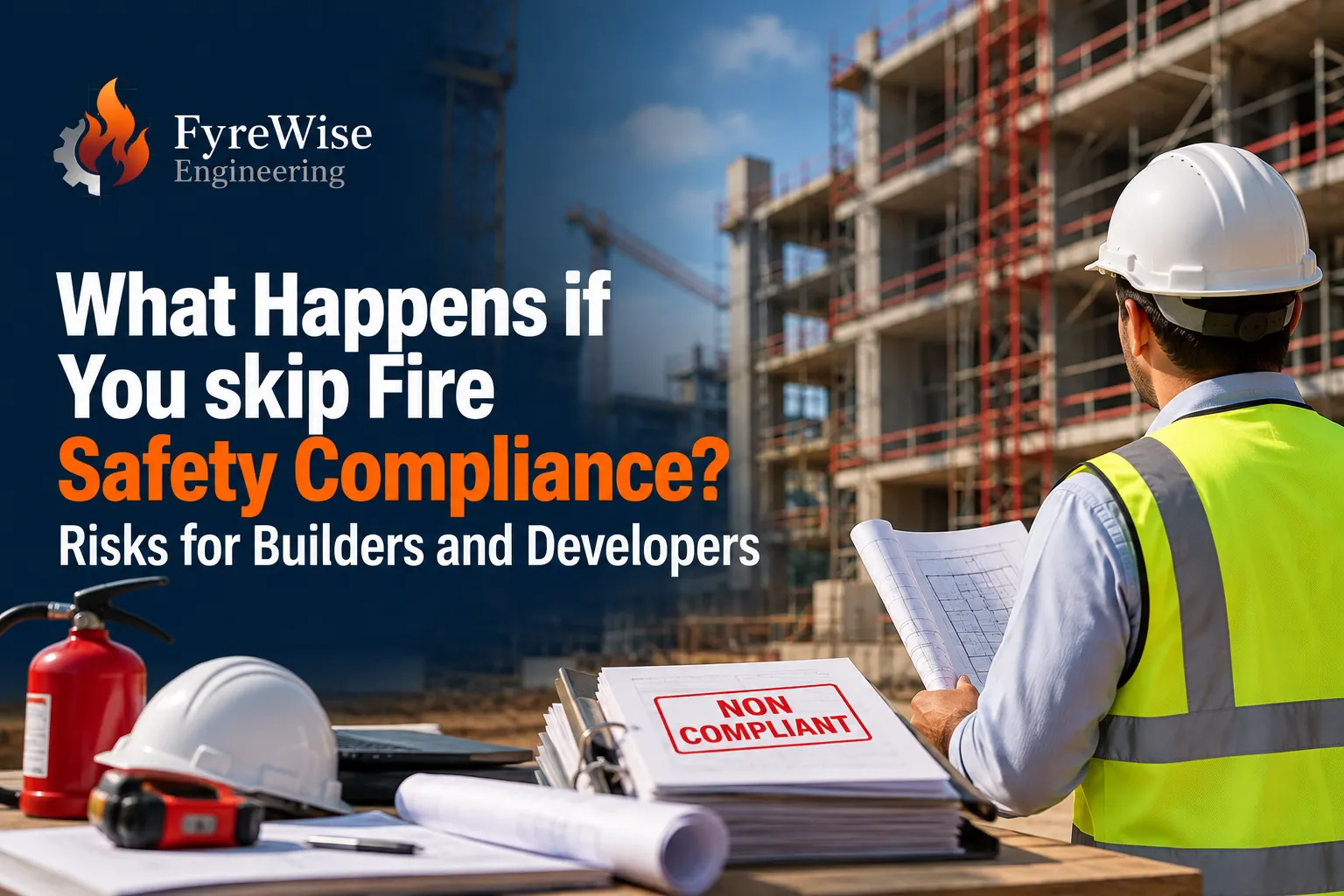
What Happens if You skip Fire Safety Compliance? Risks for Builders and Developers
Direct answer: Skipping or under-scoping fire safety compliance doesn’t save time or money. It almost always costs more of both later. The most common consequences are a certifier refusing to issue approval until the gap is resolved, forced design changes after construction has started (far more expensive than fixing it on paper), delayed or refused occupancy certification, and in more serious cases, liability exposure for builders, developers, and building owners if a genuine safety gap is only discovered after handover.
Compliance Isn’t Optional – But It’s Often Discovered Too Late
Fire safety compliance under the NCC isn’t a box-ticking exercise layered on top of a design. It’s a legal requirement for the building to be certified and occupied at all. The risk most builders and developers actually face isn’t “getting caught” in some enforcement sense; it’s discovering a compliance gap late in a project, when every option for fixing it is more expensive and slower than it would have been at design stage.
Where Non-Compliance Actually Gets Discovered
In our experience, fire safety gaps surface at a handful of predictable, and predictably costly, points:
At certifier review, post-construction. A certifier reviewing final drawings or conducting a site inspection identifies a departure from DTS provisions; boundary distance, fire separation, construction type, that was never addressed at design stage. At this point, the only options are a retrospective performance solution (which is achievable, but under time pressure) or physical rework.
At final inspection, before occupancy. Fire safety measures like sprinkler coverage, hydrant provision, or fire door ratings are checked against approved plans. Anything installed differently from what was certified can hold up occupancy certification indefinitely.
Post-handover, during an audit or incident. The most serious scenario: a genuine compliance gap is only identified after the building is occupied, sometimes triggered by an insurance audit, a fire safety inspection under AS 1851, or worse, an actual incident. At this point, liability questions extend well beyond the immediate cost of fixing the building.
The Real Cost Comparison
Resolving a fire safety issue at concept or DA stage, before drawings are locked in, typically means a fixed-fee performance solution costing a few hundred to a few thousand dollars, with no impact on the build program.
Resolving the same issue after construction has started can mean:
– Reworking completed structural or architectural elements
– Delays to the construction program while a solution is engineered and re-certified
– Additional certifier and (potentially) fire authority review cycles under time pressure
– In some cases, retrofit costs many multiples of what the original performance solution would have cost
The gap between “cheap and easy” and “expensive and slow” is almost entirely a function of “when” the issue is identified, not the underlying compliance requirement itself.
Who Carries the Risk
Builders carry direct exposure to program delays and rework costs, and in a design-and-construct arrangement, may carry the cost of resolving a gap they didn’t necessarily create.
Developers carry exposure to delayed settlement, delayed occupancy certification (and therefore delayed revenue), and reputational risk on future projects with the same certifier or council.
Project managers carry the practical burden of re-sequencing a program around an unresolved compliance item, often the single hardest thing to explain to a client or financier.
Building owners, post-handover, carry the longest-tail risk: ongoing obligations under fire safety regulations (like AS 1851 maintenance requirements), and potential liability if an inadequately addressed gap contributes to a loss.
How to Avoid It
The pattern we see across almost every late-discovered compliance issue is the same: fire safety wasn’t considered until a certifier flagged it, well after the design was locked in. The fix is straightforward and doesn’t require every project to over-engineer for risks that don’t apply. It just requires a fire safety review at concept or DA stage, before drawings are finalised, so any DTS departures are identified and resolved (via a performance solution, if needed) while it’s still cheap and fast to do so.
The Bottom Line
Fire safety compliance isn’t a risk you can choose to skip. It’s a requirement for certification and occupancy. The only real choice is “when” you address it: early, when it’s a fixed, modest cost item, or late, when it becomes a program delay, a rework bill, or in the worst cases, a liability exposure that follows the building well past handover.
Frequently Asked Questions
Can a certifier refuse to certify a building over a fire safety gap?
Yes. A certifier cannot issue final certification if fire safety requirements under the NCC aren’t demonstrably met, whether through DTS compliance or an accepted performance solution.
Is it more expensive to fix a fire safety issue after construction has started?
Almost always, yes. Often substantially so, because it involves rework of completed elements plus program delay, compared to a design-stage fix which is typically a fixed, modest fee.
Who is liable if a fire safety gap is discovered after a building is occupied?
This depends on the specific circumstances, contract arrangements, and jurisdiction, and can involve builders, developers, and building owners. This is a legal question as much as an engineering one — seek specific legal advice for your situation.
What’s the simplest way to avoid discovering a compliance gap late?
Get a fire safety/performance solution review at concept or DA stage, before drawings are finalised, so any issues are identified while they’re still cheap and fast to resolve.
Don’t let a fire safety gap surface at certification. Fyrewise offers fast, fixed-fee project reviews to catch issues before they cost you time or money — call +61 492 943 682 or email admin@fyrewise.com.au.